

Unequal Access: The Failure of Special Education in Indian Country, Part 1
By Suzette Brewer for Early Learning Nation; May 24, 2024

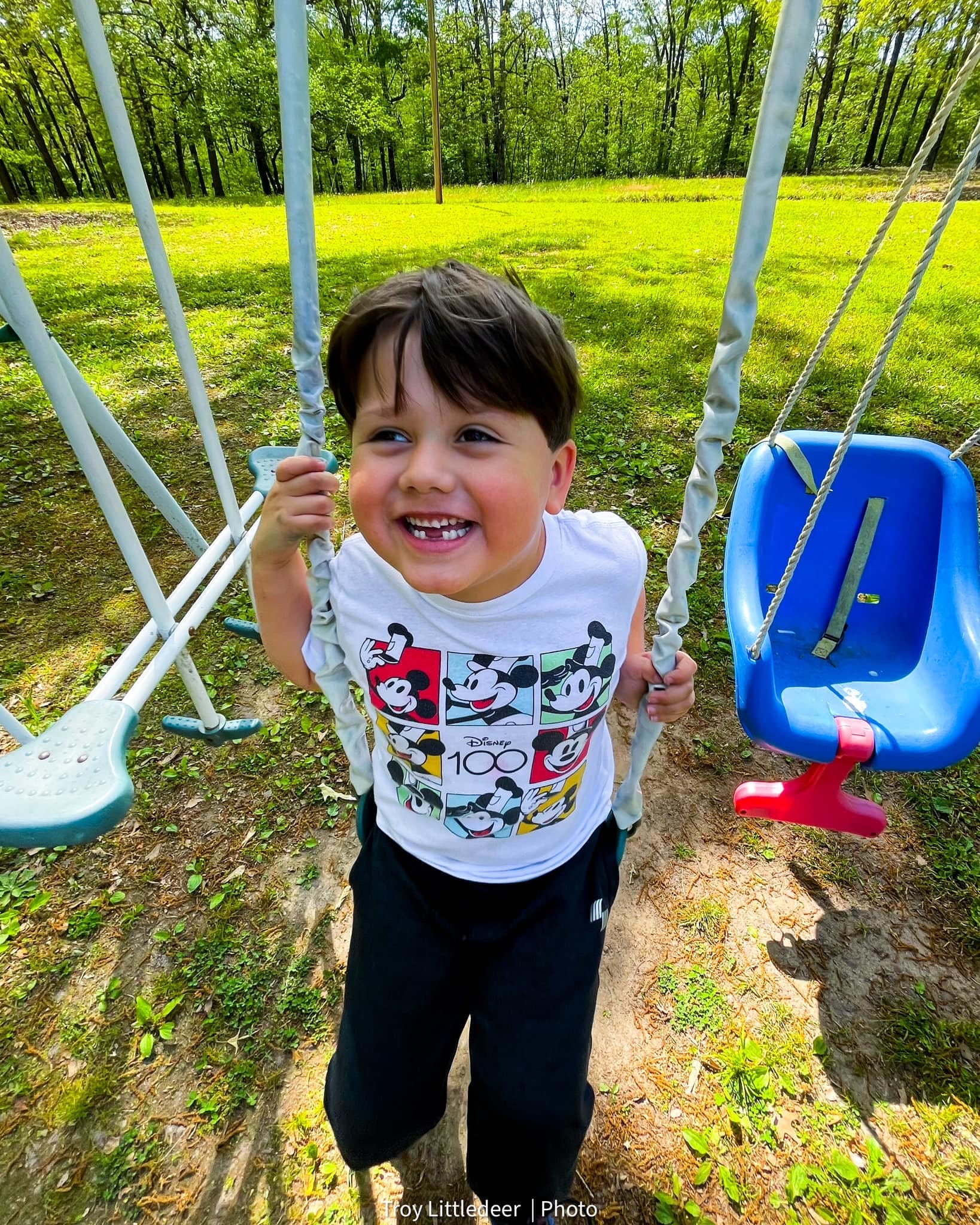
CANDY MINK SPRINGS, Okla. — Until Sequoyah Littledeer was almost four, he didn’t speak.
As a non-verbal infant and toddler, his parents struggled to understand and interpret their youngest son’s meltdowns as they navigated a disordered minefield of sensory issues. Tastes, textures, clothes, colors and sounds sent him into screaming fits that seemed to come out of nowhere.
As he got older, other atypical behaviors also began to emerge, like spending hours organizing forks, spoons and knives in ever more elaborate fractal patterns, coordinating pens and markers in rigid color schemes and obsessing over Hot Wheels.
“He couldn’t speak, so we didn’t know what was bothering him,” says his father, Troy Littledeer, who is the media director for the United Keetoowah Band of Cherokee Indians of Oklahoma. “At first, it was just little things, but over time we began to realize that he not only had sensory issues, but he also had foot problems and was substantially delayed in his milestones. So getting him checked out before he started preschool became critical”.
At almost three-years-old, Sequoyah was about to begin preschool at Dahlonegah Elementary. A small pre-K–8 school on the Cherokee Nation Reservation, Dahlonegah is a public institution serving a large majority of Native students from the surrounding communities, including historic Candy Mink Springs, where Littledeer’s family has lived for generations since the Trail of Tears in the 1830s.
With limited resources available on the reservation, the Littledeers began a desperate search to find help for their son’s multiple issues that they had to organize and coordinate themselves. Using their own insurance and financial resources, they went out-of-state to Arkansas to obtain occupational, speech and physical therapy services. After being taught how to use a visual chart, Sequoyah’s first-ever sentence was, “I want juice,” which was a game-changer in terms of his ability to finally communicate his needs.
“We could have gone to Indian Health Service, but they have waitlists that go on for months and years, and I knew we’d be waiting a long time to even get him evaluated, much less the therapies he would need to be successful in a school setting,” says Littledeer. “But he didn’t have months and years, because at that point it would have been almost too late and he would be falling further behind”.
At first, the Littledeers were skeptical about going off the reservation to seek help, due in part to a sense of leeriness with non-Native service providers who may not understand them and their particular cultural needs and values. “One of our first thoughts was: ‘How are they going to treat us?’” says Littledeer. Today, however, their fears have been assuaged by Sequoyah’s ongoing progress.
But the legally-mandated services he was supposed to receive at school tell a different story. Now five-years-old, Sequoyah has had an Individualized Education Plan (IEP) at Dahlonegah for two years that specifies 90 minutes of services per week, which has been spotty and inconsistent, according to Littledeer.
“He started his second year of pre-K in August 2023, but he wasn’t pulled out for speech therapy until October,” says Littledeer. “So he had 12 weeks of no services and we were never notified... some of what was suggested included watching YouTube videos—not one-on-one therapy”.
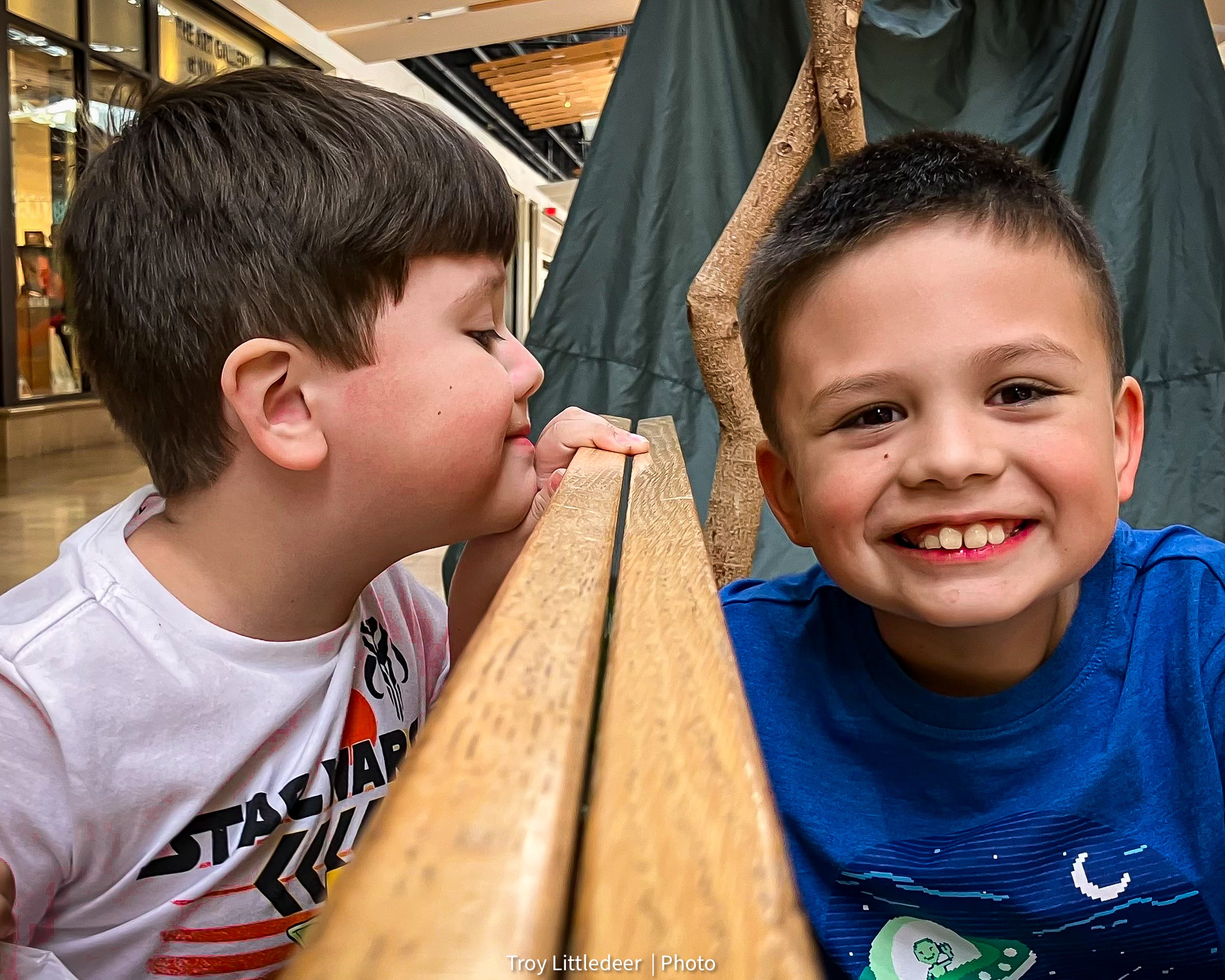
The Littledeers’ story is a familiar refrain for thousands of Native American families who say their children are not being provided mandated services required under the Individuals with Disabilities Education Act (IDEA). An Early Learning Nation investigation has revealed a systemic breakdown—from the federal level to local school districts—in failing to provide services to Native American students with disabilities.
Native Americans represent roughly 2.6 percent of the total population in the United States, yet they have the highest percentage of students served under IDEA of any racial group at 19 percent.
Diana Cournoyer, executive director of the National Indian Education Association (NIEA), believes the challenges include delayed identification of disabilities and a shortage of qualified providers. “We’ve had these problems for a very long time, and there’s a growing sense of frustration because it makes no sense,” says Cournoyer. “Therefore, we’ve got to change the system to address the unique needs of our special needs students... there has to be a way to take back control of our education”.
Now a rambunctious and very verbal five-year-old, Littledeer reports that most of Sequoyah’s issues have either begun to resolve or have been substantially reduced. “He has definitely come a long way from where we began,” says Littledeer. “It’s been a lot of work and sacrifice, but we also believe in him”.
This story comes to Giduwa Cherokee News from Suzette Brewer through their reporting work with Early Learning Nation. Originally posted on Early Learning; May 24, 2024.