

UKB vows legal fight after Interior withdraws Cherokee reservation opinion
By Troy Littledeer | @kituwahpunk

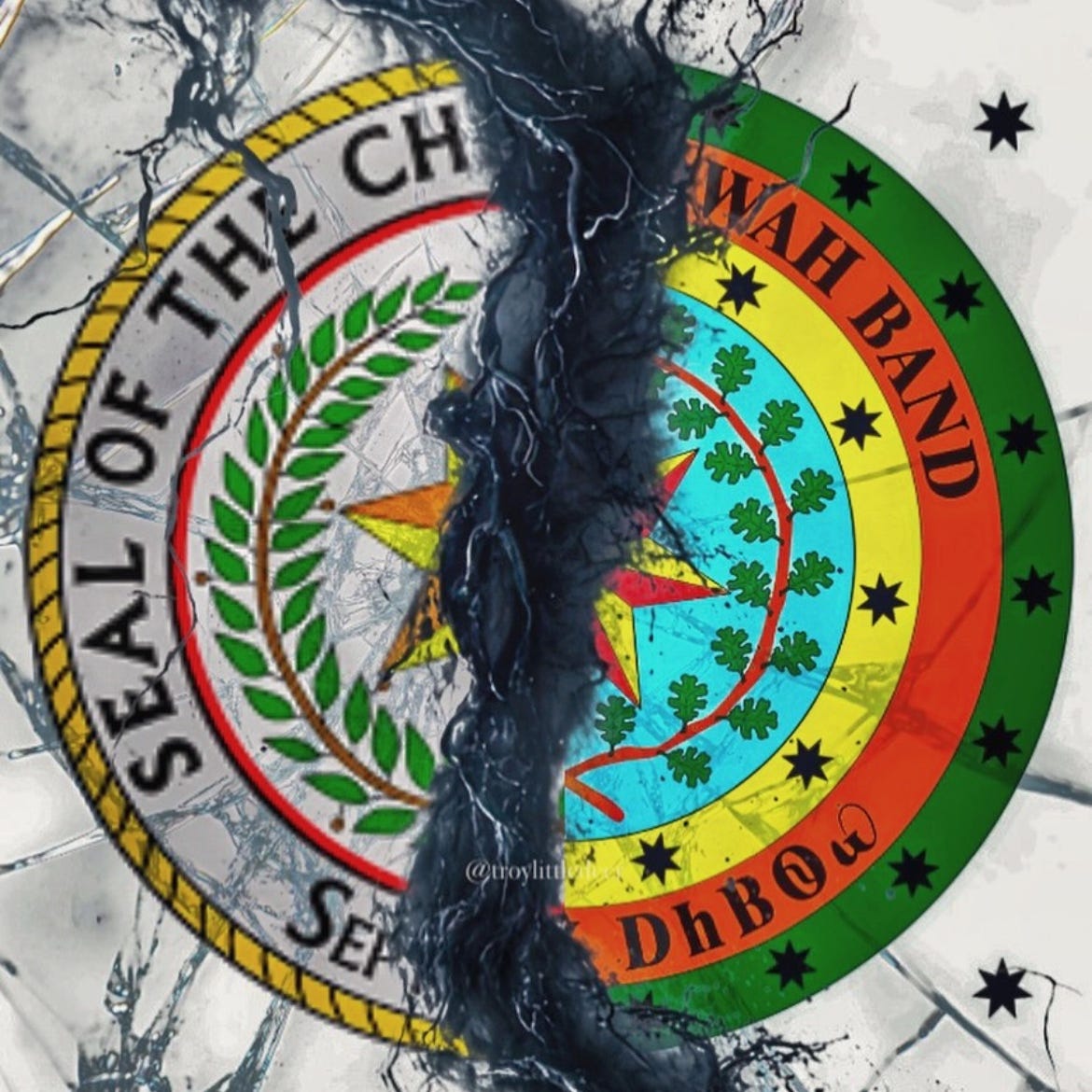
TAHLEQUAH, Okla. — The United Keetoowah Band of Cherokee Indians in Oklahoma said Friday that the U.S. Department of the Interior has withdrawn a federal legal opinion backing the tribe’s claims to reservation authority and trust land eligibility — and announced it will pursue every legal avenue to defend its treaty-based rights.
The Oklahoma Cherokee Reservation covers all or part of 14 counties in eastern Oklahoma. Which tribal governments hold authority there determines who controls land, economic development, and services for the people who live on it.
In a statement, UKB called the withdrawal of Solicitor’s M-Opinion M-37084 “deeply flawed” and said the decision was completely disconnected from the historical and legal record that has repeatedly affirmed the tribe’s treaty-based rights.
“The historical and legal record underlying United Keetoowah Band’s treaty-based rights was not created by an M-Opinion — nor is it erased by its withdrawal,” the tribe said.
M-37084 was issued Jan. 17, 2025, by then-Solicitor Robert T. Anderson. The 56-page opinion concluded that UKB is a successor in interest to the Cherokee Indians who signed the Treaty of 1846 and possesses an ownership interest in the Oklahoma Cherokee Reservation. UKB has interpreted the opinion as recognizing both UKB and the Cherokee Nation as equal successors in interest to the reservation. The opinion also concluded that land placed into trust for UKB within the reservation could qualify for gaming under the Indian Gaming Regulatory Act.
The withdrawal was signed May 22, 2026 — seven days before UKB’s public statement — by Solicitor William L. Doffermyre and designated M-37089. According to the withdrawal memorandum, Doffermyre determined that M-37084’s legal conclusions “do not represent the best interpretation of applicable laws, treaties, and federal and Supreme Court case law” and permanently withdrew the opinion in its entirety.
The withdrawal memorandum’s operative determination is one sentence. UKB noted that M-37084 contained more than 400 citations across 56 pages.
The withdrawal does not state that UKB has no treaty rights, that UKB is not a successor in interest to the 1846 treaty signatories, or that Cherokee Nation holds exclusive jurisdiction over all reservation lands. The memorandum states only that M-37084’s legal conclusions are withdrawn as not representing the best interpretation of the relevant authorities.
The withdrawal also leaves open the possibility of future reconsideration. According to M-37089, the permanent withdrawal applies “until such time as the Office of the Solicitor revisits this issue in a subsequent M-Opinion, or other guidance.”
M-37084 had been placed under suspension review on Feb. 28, 2025, by Gregory Zerzan, Senior Advisor exercising the delegated authority of the Solicitor, along with all other M-Opinions issued during the Biden Administration.
The dispute centers on a longstanding disagreement between UKB and the Cherokee Nation over treaty succession and governmental authority within the Oklahoma Cherokee Reservation. M-37084 addressed and rejected arguments that Cherokee Nation alone succeeded to governmental authority derived from the historic Cherokee Nation. The withdrawal removes Interior’s most recent formal legal endorsement of UKB’s treaty succession and land authority claims. It does not affect UKB’s status as a federally recognized tribe.
Cherokee Nation Principal Chief Chuck Hoskin Jr. issued a statement May 29, 2026 applauding the withdrawal, calling M-37084 “a Biden-era political appointee’s flawed opinion” and stating there is nothing in the historical record supporting any other tribe’s claim to Cherokee Nation’s treaty rights. The withdrawal memorandum itself does not adopt that characterization.
“As has been the case for all too long, our ultimate vindication will rely upon the judicial review,” UKB said.
According to UKB, both the original opinion and its withdrawal are expected to be part of future litigation over the tribe’s treaty-based rights.
This story has been updated with the text of M-37089, the withdrawal memorandum signed by Solicitor William L. Doffermyre on May 22, 2026.