

UKB directors meeting shifts from finances to leak investigation, raising transparency questions
By Staff Reports

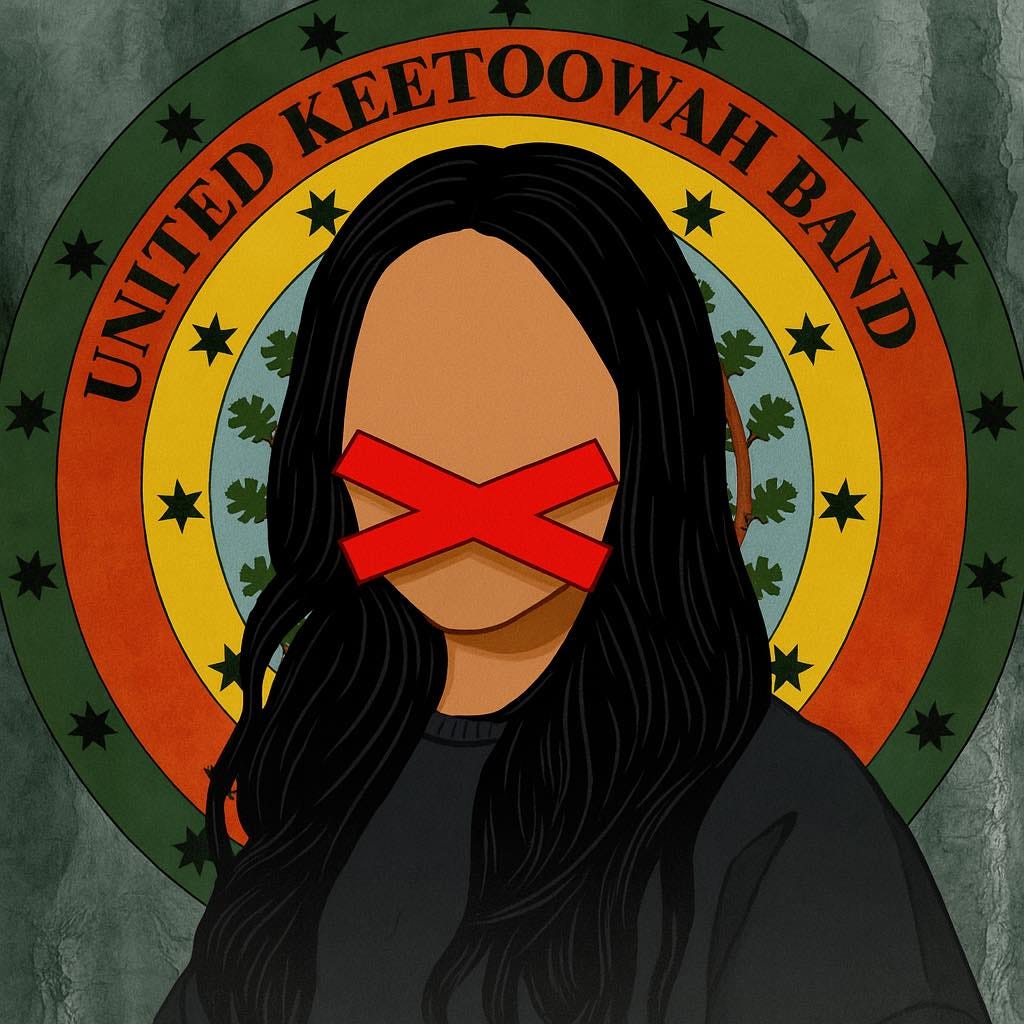
A directors meeting of the United Keetoowah Band of Cherokee Indians scheduled to address financial matters instead focused on identifying who shared a confidential document with outside parties, according to multiple people present at the July 11 meeting who spoke on condition of anonymity citing fear of retaliation.
The document at the center of the inquiry is a nondisclosure agreement the tribe distributed July 7. The Tribal Administrator sent the agreement — designated UKB NDA-2025 — to all UKB employees, board members, and committee members with instructions to sign and return it to Human Resources by the end of the week. Department directors were told they bore responsibility for ensuring staff compliance. Those who did not sign faced potential disciplinary action.
The agreement defines confidential information broadly, covering financial plans, employee records, policy discussions, and business matters in any form — spoken, written, or electronic. Some versions of the document extend the nondisclosure obligation for five years following an employee’s departure from the tribe. The agreement states that violations could result in legal action in tribal or federal court, and that the UKB could seek a court order to prevent future disclosures.
The agreement does not include explicit protections for whistleblowers or for tribal members communicating with elected officials or journalists, though it does permit disclosure to attorneys or courts when reporting potentially illegal conduct.
At least one Tahlequah District constituent contacted their Council representative to ask whether the Council had voted to authorize the agreement. According to that person, the representative said the Council had not passed any resolution supporting the NDA. No public Council resolution approving the agreement has been identified as of this publication.
Under the UKB Constitution, the Tribal Council is the tribe’s legislative body, responsible for passing formal resolutions and enacting policy. An agreement enforced without Council approval may not carry the legal authority required under that framework. Because board and committee members also received the NDA, some tribal members have raised questions about whether its application to oversight roles conflicts with the separation of powers.
Article XI of the UKB Constitution protects freedom of speech and press. The Indian Civil Rights Act provides parallel protections for tribal members in their dealings with tribal governments.
The July 11 meeting was not the first instance in which transparency concerns have been raised about UKB operations. Earlier this year, the tribe’s Media Department was closed and its director was separated from employment under Resolution 25-UKB-42EV. The closure followed the removal of published articles that had included allegations against the tribal administration.
As of this publication, no Council resolution authorizing the NDA has been made public.