

The Only One
Cherokee Nation Citizen Latricia Trammell is the only Native American coach in the WNBA. Nine seasons in, she came back to Dallas with the Chicago Sky — and the people she reaches found her courtside.


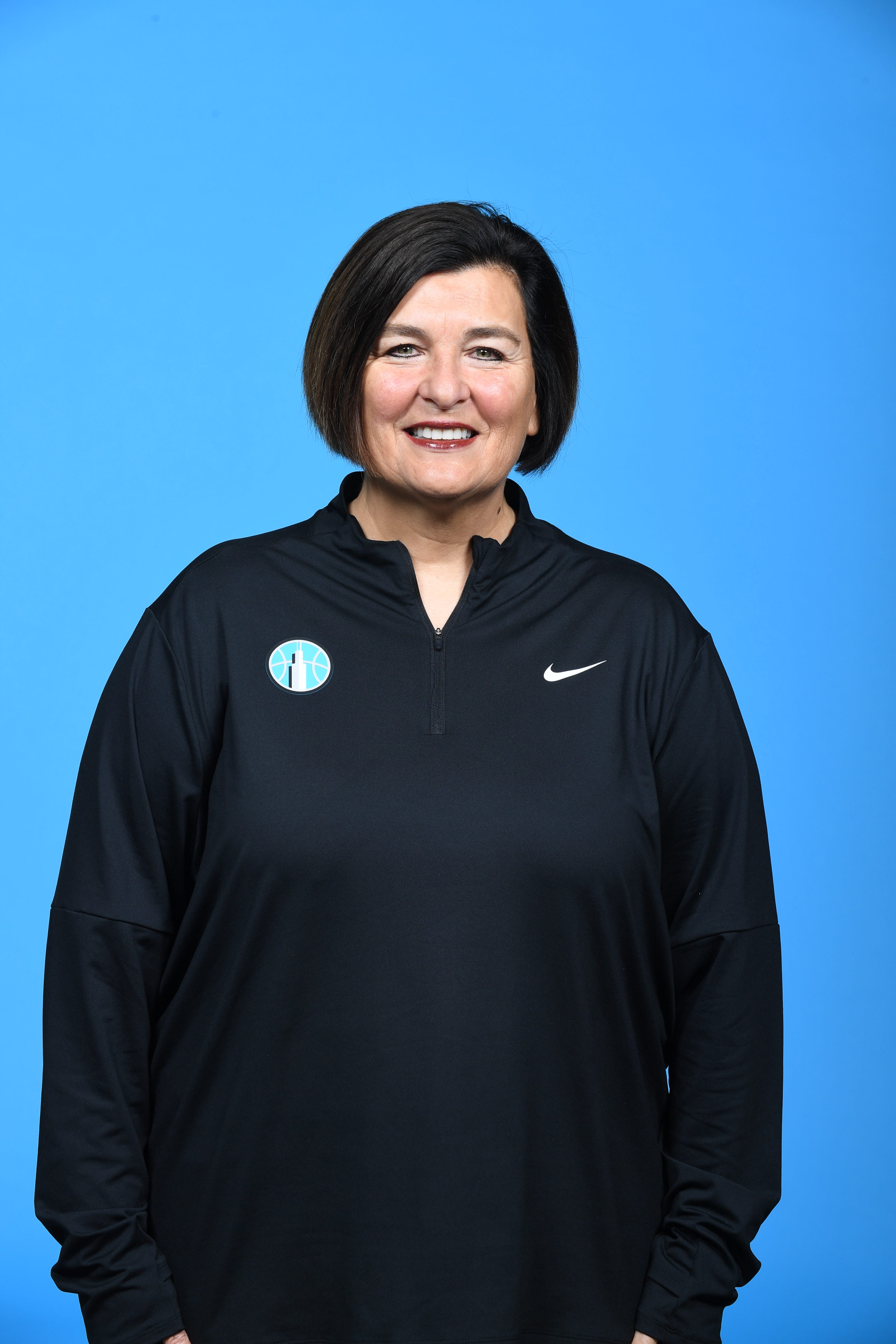
DALLAS — Latricia Trammell was midway through an interview at the Chicago Sky’s shootaround Sunday when a fan named Walt Chisholm walked over to courtside and told her about his grandmother.
His granny had never been to a sporting event in her life, he said. Not basketball, not football, nothing. Then Trammell took over the Dallas Wings, and the old woman got off the couch to come see “Coach T.” She prays for her at church now.
“Tell her to keep praying for me,” Trammell said. “Tell her I appreciate that.”
Two seasons ago Trammell ran the Wings from the home bench at College Park Center in Arlington, 20 miles from where she sat Sunday. In 2023, her first season as a WNBA head coach, Dallas won 22 games — its most since relocating from Tulsa — took its first playoff series since the move, and Trammell finished runner-up for Coach of the Year. A year later the roster collapsed under injuries, the Wings went 9-31, and Dallas let her go. It was one hard season in a career that had known almost nothing but winning: a 105-45 record across Oklahoma and Texas high schools, back-to-back NAIA national championships at Oklahoma City University in 2014 and 2015, NAIA Coach of the Year both seasons, an 85-10 record across her three years running the Stars. Sunday she was back in the market as an assistant on Tyler Marsh’s Sky staff, hours before facing the franchise that dismissed her, at American Airlines Center, a downtown showcase building that was never hers. The Wings won it, 96-91, in front of 13,236.
She is a Cherokee Nation Citizen, and the only Native American coach in the WNBA. “I’m part of the Cherokee Nation from my mother,” she said. Her mother, Edna Trammell, was raised by her great-grandparents near Tahlequah. Her great-grandfather was a medicine man. The family always went back. Her mother’s parents died young and are buried in Siloam Springs, Arkansas, just across the stateline from the Oklahoma Cherokee Reservation.
“I remember a lot of, I say, our people, Cherokee people, came and supported me here,” she said of her Dallas tenure.
The league’s Native history is short enough to hold in one paragraph. Ryneldi Becenti, Diné, became the first Native American to play in the WNBA with the Phoenix Mercury in 1997, the league’s first season. Angel Goodrich, Cherokee, ran the point at Sequoyah High School in Tahlequah and at Kansas before the Tulsa Shock drafted her in 2013 — at the time, the highest a Native player had ever been taken. Shoni Schimmel, of the Confederated Tribes of the Umatilla Indian Reservation, went eighth overall a year later and became a WNBA All-Star Game MVP as a rookie. Alissa Pili, Iñupiaq and Samoan, went eighth overall in 2024, the first Alaska Native player drafted into the league. All of them players.
Trammell is the coach.
The coaching came from Seminole, Oklahoma, where she grew up after her family moved from Claremore when she was one. Her brother Donnie coached the boys at Seminole High School while she was a student there. She watched film with him and saw what he was building. “I just saw the rewards in the relationship he built with his players and team,” she said. “I don’t ever remember a time that I did not want to coach. It’s always been in my DNA.”
Asked what Native players and coaches trying to reach this level should know, she didn’t hesitate.
“We are a strong minded, strong bodied culture,” she said.
Her parents drilled two things into her growing up: never give up, and impossible is nothing.
“You’ve got to have that mentality,” she said.
Thirty-three years later, somebody once asked whether she ever thought she’d coach professionally.
“You’re daggum right,” she told them.
The league tried to teach her otherwise. When she first arrived, someone told her professional basketball is a business, that relationships don’t matter at this level.
“I’m so glad I didn’t listen to that,” she said. “Me coming in and just being who I am, being my authentic self, helped greatly. I have great relationships with players across the league. And I think you need that, and a lot of people lose that, even at this level. It’s a big part of winning.”
Nine WNBA seasons in, she measures the career by who it reaches.
“I hope that I can continue to inspire everyone, not only our culture,” she said. “I grew up in a small town, and here I am nine years in.”
Troy Littledeer is an award-winning Indigenous journalist and photographer based in Adair County, Oklahoma. A member of the United Keetoowah Band of Cherokee Indians, he has more than two decades of experience covering tribal governments, education, sports, and community issues. He received the 2025 Tim Giago Free Press Award from the Indigenous Journalists Association for defending tribal press freedom.
Special thanks to Tristan Tucker and Courtney Paris for their help with this interview.
 | A guest post by
|