

"People are waking up": Sanders brings Fighting Oligarchy tour to Tulsa
By Troy Littledeer | @troylittledeer | Photos by Troy Littledeer


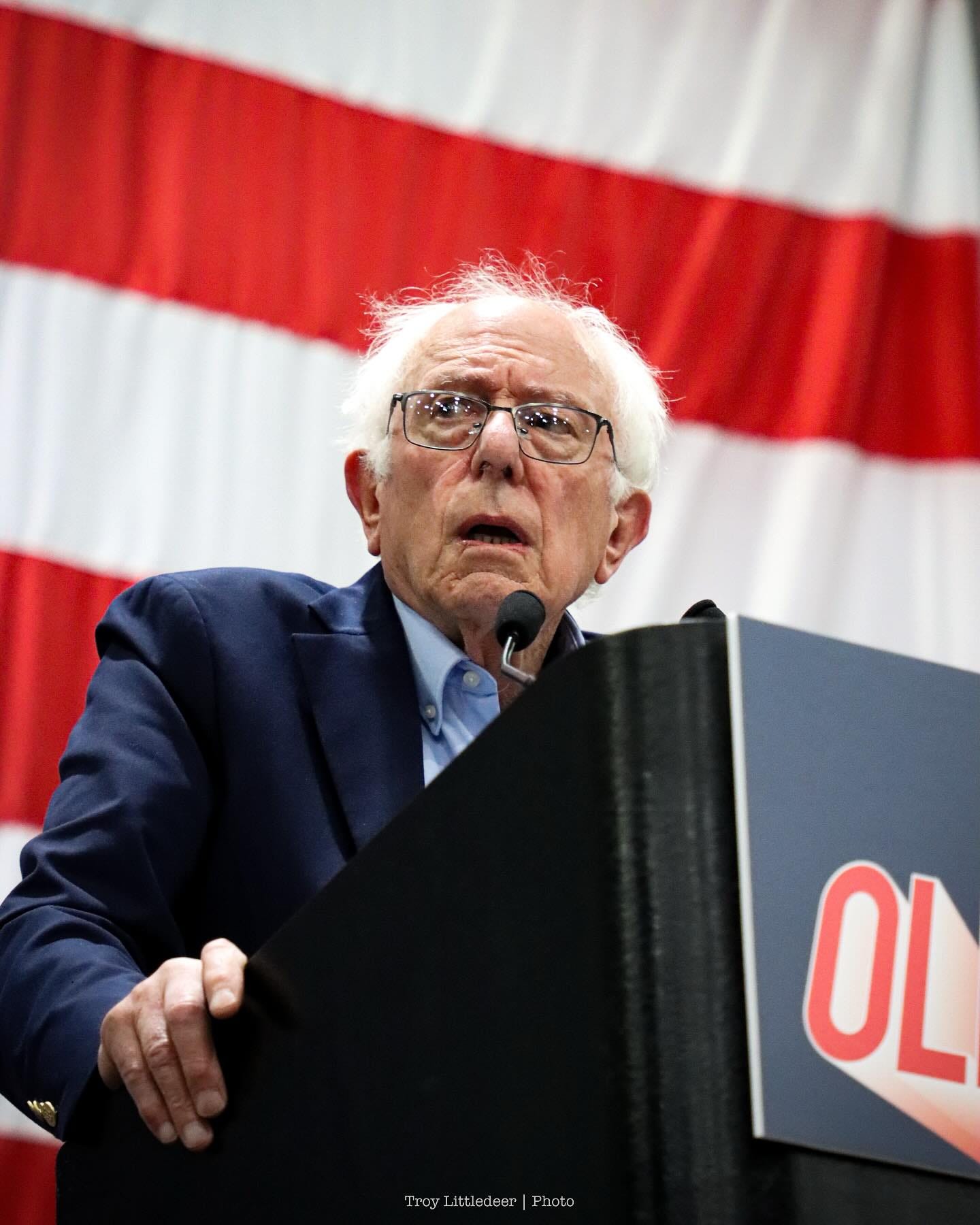
Thousands packed the Cox Business Convention Center on Saturday as Sen. Bernie Sanders brought his Fighting Oligarchy tour to Oklahoma, part of a national campaign he describes as a direct challenge to corporate power and political influence.
Sanders did not ease into it. He opened on the economic pressure millions of Americans carry daily — rent increases, medical bills, car repairs, the math that never adds up at the end of the month.
“People are waking up and they’re saying: What happens if my landlord raises the rent? My kid is sick, but I can’t afford to take her to the doctor. My car breaks down, and the mechanic says it’s $1,000. I don’t have $1,000. And if I don’t get to work, I get fired,” Sanders said. “Millions and millions of Americans are living under that stress every single day.”
For northeastern Oklahoma families carrying those same numbers — a grocery bill that doesn’t stretch, a gas tank that doesn’t fill — the math Sanders described was not abstract. It was Tuesday.
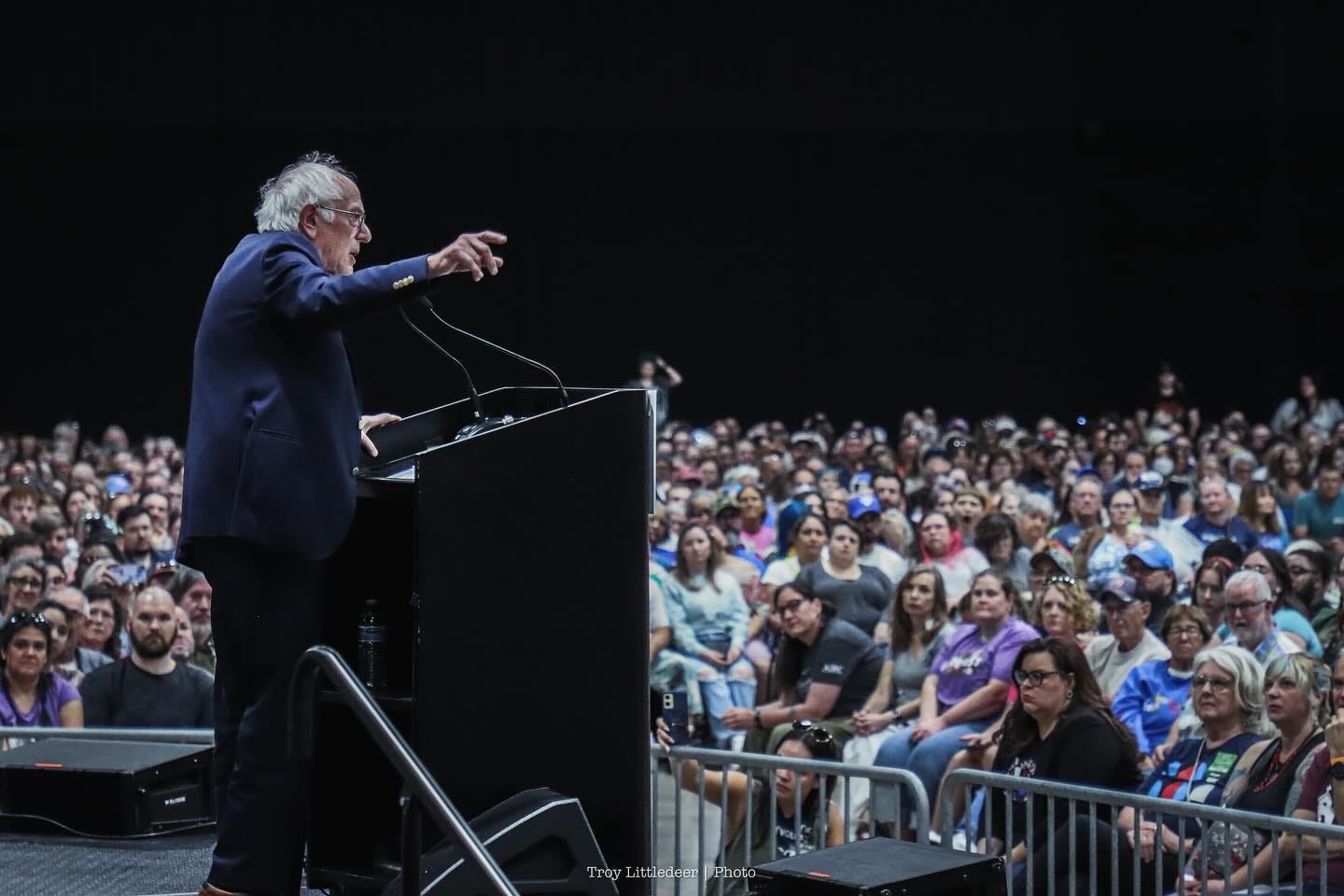
He also addressed foreign policy, reacting to reports of U.S. involvement in Israel’s conflict with Iran that he said he had just received before taking the stage. He called the reported action a violation of the constitutional separation of powers.
“Not only is this news that I’ve just heard alarming… it is so grossly unconstitutional,” Sanders said. “Only Congress can take this country to war. The president does not have the right.”
The Tulsa stop is one of several Fighting Oligarchy tour dates Sanders has scheduled across the country as part of his effort to mobilize voters against what he describes as oligarchic control of American democracy.
Troy Littledeer is a writer and photographer based in Northeastern Oklahoma. He is a member of the United Keetoowah Band of Cherokee Indians and reports on tribal governance, education, and public accountability across Indian Country and surrounding communities. His work centers primary documents and recorded statements, with a focus on tribal law and the public record. Troy is a lifetime member of the Indigenous Journalist Association.
 | A guest post by
|