

IF THE CHIEF COMMANDS THE POLICE, WHERE DOES A MEMBER GO FOR A PROTECTIVE ORDER?
By Troy Littledeer | @kituwahpunk


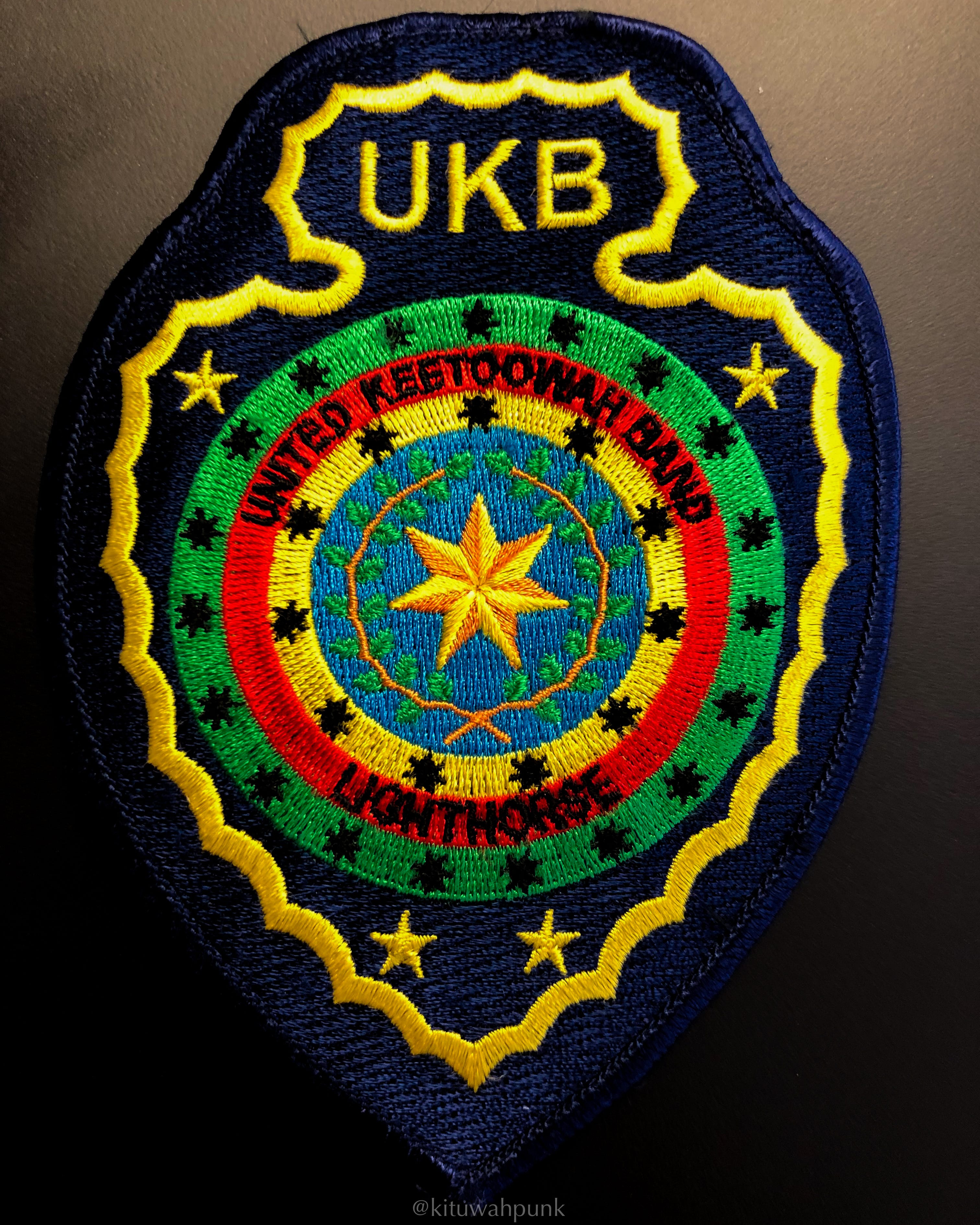
Here’s the question. If the person you need protection from is also the elected official who commands the tribal police, why would you file for a protective order in that same chain of command?
That question isn’t unique to the United Keetoowah Band of Cherokee Indians in Oklahoma. It applies to any government. Public confidence in a justice system depends on more than fairness. It depends on the appearance of justice.
The UKB Lighthorse DO the job. The job isn’t in question.
The office above them is.
Officers hold CLEET certification, the same training and licensing standard every municipal and county department in Oklahoma carries. They’re cross-deputized with the Bureau of Indian Affairs. That standing came under public attack in late 2024, when Cherokee Nation Principal Chief Chuck Hoskin Jr., Cherokee Nation Attorney General Chad Harsha, and more than 30 Oklahoma law enforcement agencies called the department a “rogue” and “fake” police force with no legal authority. UKB pushed back with its certifications on the record. Whatever the outcome of that jurisdictional fight, it’s a separate argument from the one here.
The UKB Tribal Police Department Code puts the Chief at the top of law enforcement. Section 103 states the Chief “shall also be recognized as the Commander of the Lighthorse.” The Commander “shall keep informed as to the efficiency and conduct of the Lighthorse.” Section 105 states the Lighthorse Director’s first duty is “to obey the lawful orders of the Commander.” The Director runs the department day to day. The Commander sits above the Director by law, regardless of who holds either office at a given time.
The UKB Courts Act builds the Judicial Branch separately. It creates a District Court and a Supreme Court. Section 102 defines the Court Administrator as “the top administrative position at the Tribal Court, who is responsible for budgeting, personnel, facilities, and management of the Tribal Courts” — a judicial office, not an executive one.
The organizational chart adopted under Resolution 25-UKB-22, March 1, 2025, shows both structures on the same page. Tribal Council sits at the top. Chief connects down to Lighthorse Director. Supreme Court connects down to District Court, then to Courts Administration through a line that also touches the Tribal Administrator’s office. That Tribal Administrator’s office no longer exists by that title — Council eliminated the position January 3, 2026 — and no resolution in the public record shows the chart redrawn since.
None of this means UKB courts can’t hear a protective order case, or that Lighthorse officers can’t serve one. The Crimes and Punishment Act says plainly: “Domestic violence and family violence will not be tolerated.” Violating a protective order is a criminal offense under tribal law. But asking Lighthorse officers to serve papers on their own Commander, or enforce an order naming him, places the department in a position that could raise questions about impartiality through no fault of the officers.
This isn’t a question about which court has authority. It’s a question about institutional independence and public confidence.
A UKB member seeking a protective order against the Chief could reasonably prefer a court and law enforcement agency that do not report, directly or indirectly, to the respondent. That separation protects everyone involved. A state district judge and the officers who enforce that court’s orders do not report to the tribal chief. That separation protects the member. It also protects the Lighthorse from being asked to choose between an order and a chain of command — a choice that isn’t theirs to have to make. It protects the chief too. A process free of any tribal reporting line means no one can later claim the outcome, whatever it is, was shaped by who sits at the top of that chain.
The U.S. Supreme Court put it plainly seven decades ago in In re Murchison: “Justice must satisfy the appearance of justice.” That standard exists for every government that polices itself. Here, it exists for the officers who serve it, and for the official at the center of the question, too.
By Troy Littledeer. Littledeer is an award-winning Indigenous journalist, photographer and member of the United Keetoowah Band of Cherokee Indians in Oklahoma. He writes about tribal government, sovereignty, public accountability and rural communities. He is the recipient of the 2025 Tim Giago Free Press Award from the Indigenous Journalists Association.
SOURCES
UKB Tribal Police Department Code of 2022, Sections 103, 105.
UKB Courts Act of 2022, Section 102(e).
UKB Crimes and Punishment Act of 2022, Introduction — Domestic Violence, Legislative Findings.
Resolution 25-UKB-22, United Keetoowah Band Tribal Council, March 1, 2025.
A.G. Opinion No. 2026-01, Klint Cowan, January 9, 2026.
In re Murchison, 349 U.S. 133, 136 (1955).
KTUL, FOX23, ICT News, FourStatesHomepage — Nov.-Dec. 2024 reporting on Cherokee Nation/UKB jurisdictional dispute and Lighthorse certification.
 | A guest post by
|