

Cherokee Nation presses Oklahoma lawmakers to protect Medicaid expansion
By Staff Reports

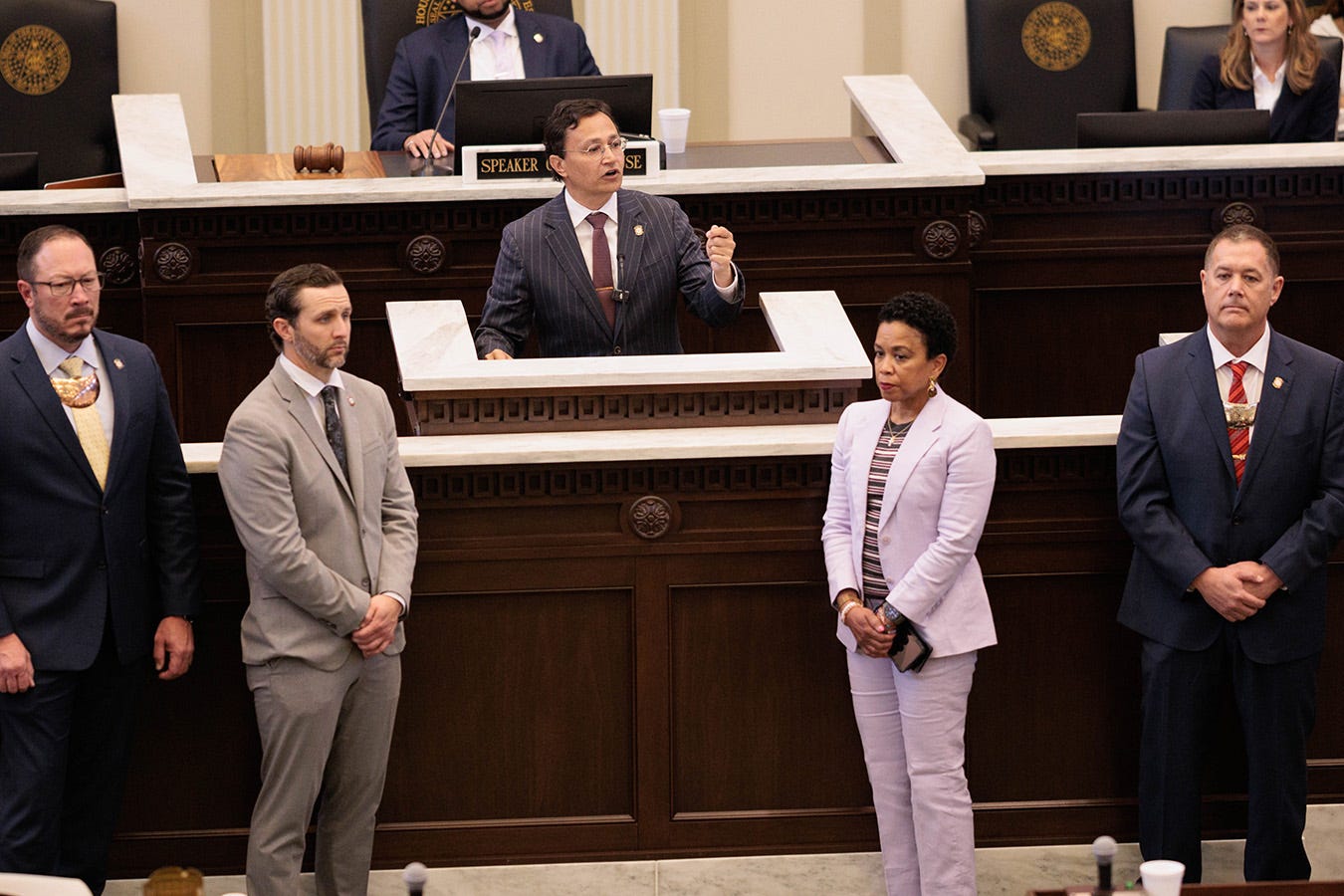
Cherokee Nation Principal Chief Chuck Hoskin Jr. and Deputy Chief Bryan Warner met with state lawmakers at the Oklahoma State Capitol on April 9 during Cherokee Nation Legislative Day, urging legislators to reject efforts to roll back Medicaid expansion and outlining the tribe’s broader policy priorities for the session.
Hoskin addressed members of the Oklahoma House and Senate, pressing them to oppose House Bill 4440 and House Joint Resolution 1067, which would place the state’s Medicaid expansion on a special August election ballot.
He told lawmakers that Medicaid expansion funds a significant portion of the tribe’s health care operations through third-party revenue.
“Third-party revenue generation is the key to funding our health initiatives,” Hoskin said. “Medicaid expansion has created over 1,400 jobs, over $92 million in wages, and has generated over $222 million in total economic impact within the Cherokee Nation Reservation.”
Cherokee Nation Health Services reported providing more than 3 million patient services annually. In 2025, the system served nearly 17,000 Medicaid expansion patients, including more than 113,000 medical visits, 10,000 dental services and 143,000 pharmacy services.
Hoskin said reversing the expansion would reduce funding flowing to both tribal and non-tribal rural health providers.
“While there are valid concerns about the cost of Medicaid expansion, the state of Oklahoma cannot afford to lose this vital program,” Hoskin said.
Warner said the tribe’s priorities extend beyond its own citizens.
“These issues are very important not just to the Cherokee Nation but to our neighbors, other tribes, and non-natives living in the state of Oklahoma,” Warner said.
Cherokee Nation is also supporting Senate Bill 1721, which would extend the Oklahoma Advisory Council on Indian Education for three years and revise its representation requirements.
Hoskin closed by addressing the ongoing relationship between the tribe and the state.
“There will be days ahead when we will have chances to collaborate and make this state even better than it is now,” he said.
Cherokee Nation and UKB dispute IHS health funding allocation in congressional testimony
Staff Reports | Giduwa Cherokee News
March 17, 2026
The Cherokee Nation and the United Keetoowah Band of Cherokee Indians presented conflicting accounts to Congress in written testimony over an Indian Health Service funding decision that both tribes say affects health care delivery on the Cherokee Reservation.
Cherokee Nation Principal Chief Chuck Hoskin Jr. submitted written testimony March 17, 2026, to the U.S. House Appropriations Subcommittee on Interior, Environment, and Related Agencies contending that IHS allocated approximately $5.6 million in Purchased and Referred Care funding to the UKB without meaningful consultation and in a way that duplicates services already provided by the Cherokee Nation health system.
Hoskin compared the funding allocations by user. The UKB allocation equates to approximately $2,800 per user for a population of about 2,000 people. Cherokee Nation services in the Claremore area receive approximately $7 million for more than 100,000 patients — approximately $70 per user.
“The decision was made without meaningful consultation,” Hoskin wrote, according to the testimony.
UKB Chief Jeff Wacoche submitted written testimony dated December 30, 2025, to the same subcommittee presenting a different account. Wacoche wrote that the IHS funding follows established formulas for a non-duplicative user population and does not reduce services available to other tribes. He wrote the allocation corrects prior IHS actions that had shifted UKB tribal shares to the Cherokee Nation, and that the funding was structured specifically to serve a limited user population and avoid duplication.
Wacoche also asserted the UKB’s authority to provide health services to its members within the reservation.
The two testimonies present directly conflicting factual claims on three points — whether the funding duplicates existing services, whether IHS conducted adequate consultation before the allocation, and whether prior funding arrangements improperly transferred UKB tribal shares to the Cherokee Nation. Neither testimony has been adjudicated. Both are in the congressional record.
The subcommittee has not publicly released findings or taken action on the competing claims as of this publication.
Why do OK Cherokees tend to vote Republican? That just seems very self-defeating. You can’t even get a group of Republicans to agree on equality.